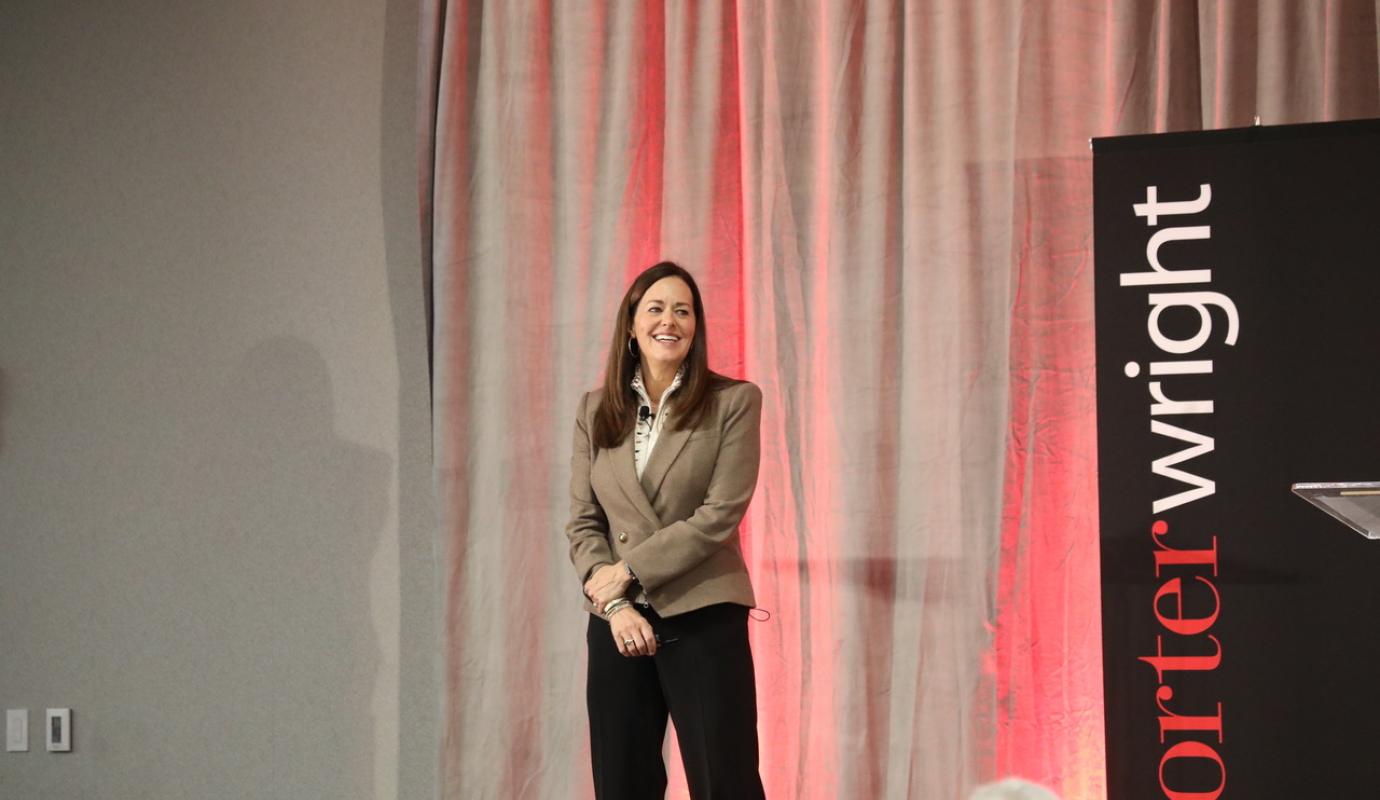
Laura Cooke ’90
Founder & CEO, Positive Foundry • Columbus, OH
You’ve described yourself as a serial entrepreneur. Positive Foundry is actually your third venture. What came before it?
This is technically my third entrepreneurial venture — but the only one that stuck. Before Positive Foundry, I ran a multimedia publishing business that put retail catalogs on CD-ROM. Then, a meeting facilitation business. Neither of them lasted. But both of them taught me something. Failure is a great teacher if you’re paying attention.
After those experiences, I spent almost 12 years at Wellington in various roles, including as a teacher and as Assistant Head. I loved every minute of it. And it was actually through that work — through designing and teaching new courses, through watching students engage with ideas about leadership and well-being — that I found the thing I’d been building toward all along.
How did you discover positive psychology, and why did it feel urgent enough to build a company around?
I came to it through my own stress-related illness. I had to stop. And in that stop, I found this entire field of science — practical, evidence-based research on how people can actually flourish — that almost nobody was using. That felt wrong to me. There is so much science available. Small, proven techniques that can make a big difference in people’s lives if they’re given the opportunity to learn and grow.
I spent a year commuting to Chicago on weekends to earn a Certificate of Applied Positive Psychology from the Flourishing Center. Then I launched Positive Foundry in December 2016. We’ll celebrate our tenth year this December.
What does Positive Foundry actually do, and how does it work?
We exist to help people-first leaders build a culture of well-being so that employees, teams, and businesses thrive. We do that primarily through a platform called BetterYet Teams, where certified internal champions inside organizations use our content to teach 12 skills — emotional intelligence, resilience, gratitude, positive relationships, mindfulness, and more — as part of a regularly scheduled weekly meeting. The idea is that well-being isn’t a retreat or a seminar. It has to be embedded in the rhythm of how teams already work.
We also do keynotes and workshops. We typically work with organizations in the US with between 500 and 10,000 employees. The results are concrete: when we wrap up a year-long program, 80 percent or more of participants, as reported in anonymous surveys, say they felt an increase in personal well-being and a deeper connection to their team. That feedback loop never gets old.
You’ve been certified as a woman-owned business through WBENC. What has that recognition meant for Positive Foundry?
It was a meaningful moment. Taking a risk and seeing it pan out is always exhilarating — whether it’s a new keynote, a new concept we’re testing with clients, or a credential like WBENC. It validates something you’ve been building quietly for years and opens doors to new conversations.
You’re also a published author and a regular guest lecturer. What’s the through line?
This spring, I contributed a chapter on Flow to How to Flourish, a collective work published by the Flourishing Center on March 20 — World Happiness Day. Wellington’s own Engagement Index is featured in my chapter, which felt like a beautiful full-circle moment. I received my Certificate of Applied Positive Psychology from the Flourishing Center, and many of my fellow CAPP graduates contributed to the book as well.
I’m also a regular guest lecturer at Canyon Ranch Spa in Lenox, Massachusetts. The through line across all of it is the same thing it’s always been: getting the science to the people who can use it.
How did Wellington shape you as an entrepreneur?
I’m from the second graduating class. Everything we did was new, and everything was possible. We named the school mascot — and then changed it. We were the Wildcats and voted to become the Jaguars. We created Student Council from scratch, launched a Battle of the Bands that brought students from high schools across the city to the Gard gym, and started the girls’ lacrosse team with a mixed group of players from Worthington. My entire middle and high school years were entrepreneurial. We helped start traditions that still exist today — Pinson Day began during our years at the school.
Then, after 10 years in business, I returned to Wellington and worked for Rob Brisk, an entrepreneurial Head of School who was always seeking innovative ideas. He encouraged administrators to pitch new courses. I created and taught Leadership in Business and Applied Positive Psychology. It was through that experience — through watching students engage with the material — that I discovered my passion for teaching and learning. Positive Foundry would not exist without that opportunity. Rob Brisk is one of the most important mentors of my professional life.
You recently hired Milan Gonela ’20 as your first-ever sales representative. What does that mean to you?
It means a lot. There’s something that feels exactly right about a young Jaguar joining the work I started, in part, because of what Wellington gave me. I hope he’s with us for a long time.