A Community Engagement Grant supports a three-trimester data science sequence that challenges students to apply math, values, and critical thinking to real-world questions.
How do we equip students for a data-driven world? Supported by a Community Engagement Grant, Alyson Lee, upper school math and math department curricular lead, completed summer training through Stanford University and launched a three-trimester data science sequence at Wellington. This program empowers students to connect math, values, and critical thinking directly to real-world data challenges.
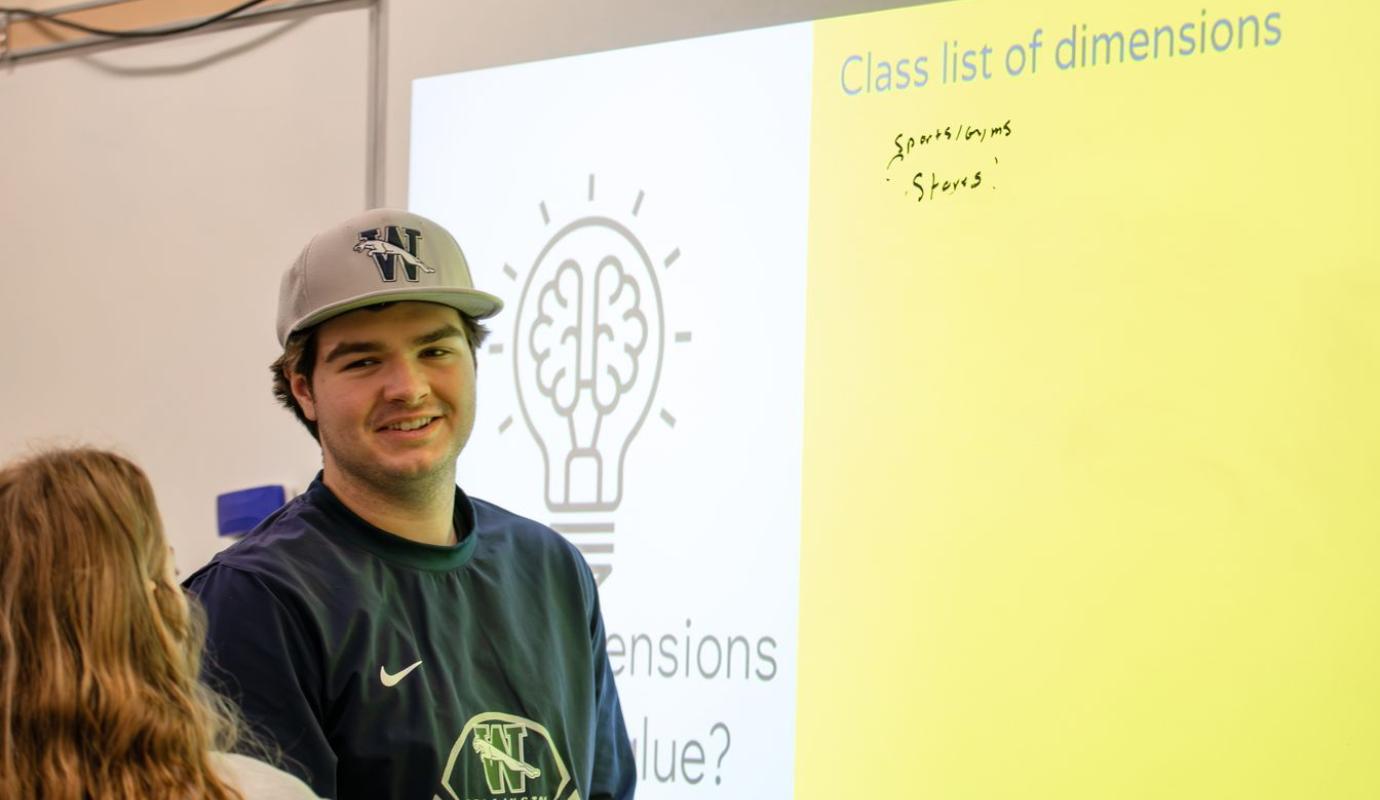
In a recent class, students faced a complex challenge: ranking cities where they might want to live. Before seeing any data, they listed the characteristics they valued in a place to live. Their lists went beyond surface-level preferences and included access to health care, walkability, public transportation, green space, cultural offerings, and cost of living relative to income. This values-first approach helped students see that data analysis begins with human priorities, not numbers.
Once those characteristics were established, Lee introduced a shared case study using data from Racine, Wisconsin, allowing the class to apply their thinking together before working independently. Students grouped their characteristics into broader dimensions such as safety, affordability, and lifestyle, then explored publicly available datasets to identify indicators that could represent each dimension. Rather than following a prescribed formula, students made decisions about how to build their own models, discussing whether to use percentages, reverse coding, or proportional comparisons to create meaningful indices. The shared example helped students understand both the mechanics of the process and the reasoning behind it before applying those skills to cities of their own choosing.
The process was deliberately iterative. Through refining their thinking, analyzing data, and debating priorities, students developed skills in clear communication, critical evaluation, quantitative reasoning, and model building. As a result, the project will prepare them to approach complex data challenges with confidence beyond this course.
This work reflects the broader data science sequence Lee leads this year. Trimester 1 focused on Variability and Variation. The current trimester centers on Patterns, Predictions, and Probability. In spring, students will study Machine Learning and Modeling.
Throughout the year, students work on significant projects relevant to their interests, building practical data science skills applicable across diverse fields. Families and students experience how Wellington’s challenging math pathways prepare graduates to thrive in a data-driven future.